About
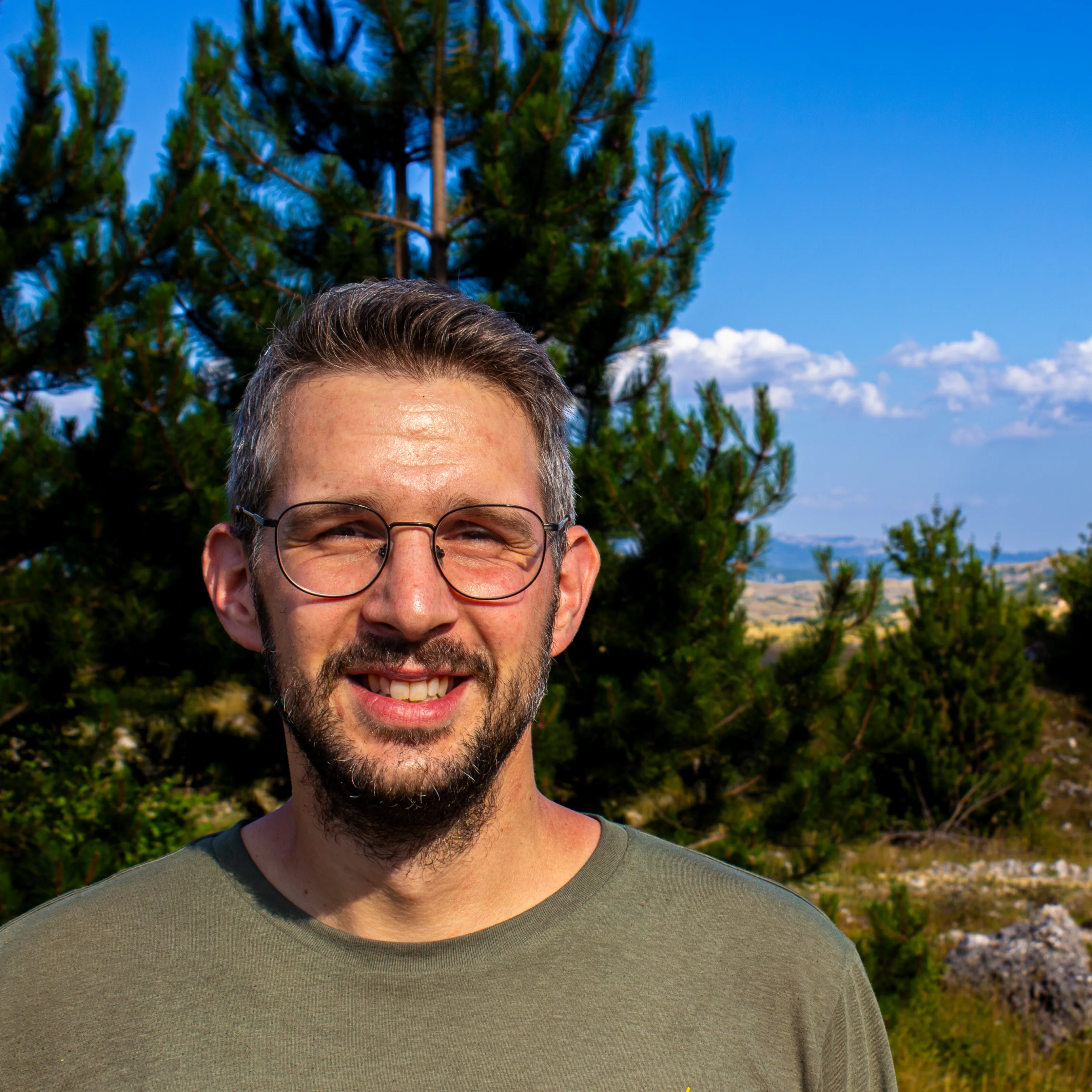
Mattia Menchetti
I use genetic data, mostly from ants, to work out how species came to be where they are, and how much of that people have rearranged.
The glacial cycles repeatedly forced populations into refugia and allowed them to expand again, and the resulting structure is still detectable in their genomes. Human transport moves species across the same landscape within decades.
I work at the Museum für Naturkunde in Berlin, in Bonnie Blaimer's lab at the Center for Integrative Biodiversity Discovery. My current project, AntTRAILS, is a Marie Skłodowska-Curie fellowship testing how far back human influence can be detected in the genomes of Mediterranean ants. It is based on high-coverage sequencing of Pheidole across the region, and follows on from my earlier research, in which I assembled large genetic datasets for European ants.
Interpreting a distribution depends on knowing which species are on the map, so a good deal of the work is taxonomic. I have described three species new to science and found others that had been passing under names we already knew. It also depends on reference data being available, which is why I built the first comprehensive DNA barcode library for European ants, so that identification and biosurveillance can rest on open records. The same groundwork makes it possible to record change as it happens: non-native ants recorded for the first time in a country, and the first report of the fire ant Solenopsis invicta breeding in Europe.
My route here was not a direct one. I was publishing on behavioural ecology and biological invasions for several years before I started a PhD, and the questions have not changed much since, though the methods have. Before Berlin I was at the Institute of Evolutionary Biology in Barcelona and at the University of Florence, where I managed a National Geographic project on the long-distance migration of the painted lady, coordinating sampling by researchers and citizen scientists across Europe, East Asia and Africa.
Most children have a bug period, and I never grew out of mine.
E. O. Wilson
Positions and training
- 2025 –Marie Skłodowska-Curie Postdoctoral FellowCenter for Integrative Biodiversity Discovery, Museum für Naturkunde, Berlin
- 2025Juan de la Cierva Postdoctoral grant, SpainAwarded 19 June 2025 in the 2024 call. Renounced in favour of the Marie Skłodowska-Curie fellowship
- 2024Research AssistantButterfly Diversity and Evolution Lab, Institute of Evolutionary Biology (CSIC-UPF), Barcelona
- 2020 – 2024PhD, BiomedicineUniversitat Pompeu Fabra, Barcelona. Excellent cum laude, UPF Extraordinary Award and CSIC Relevant Thesis Award. Supervised by Roger Vila and Leonardo Dapporto
- 2020Research AssistantNumerical and Experimental Zoology Lab, University of Florence
- 2018 – 2019Research Assistant, part-timeButterfly Diversity and Evolution Lab, Barcelona. Project manager for the National Geographic butterfly migration project
- 2014 – 2020MSc BiologyUniversity of Florence, 110 cum laude
- 2009 – 2014BSc Biological SciencesUniversity of Florence
Editorial activity
- 2026 –Subject EditorJournal of Hymenoptera Research
Community and citizen science
 iNaturalistCuratorCitizen science platform. Over 19,000 observations and 14,000 identifications.2015 – ongoing
 WikipediaContributorItalian and English Wikipedia as MattiaMen. More than 100 pages created, mostly taxonomic.2012 – ongoing
 BionomiaContributorLinking natural history specimens to the people who collected them. Over 1,100 attributions.2024 – ongoing
 PhyloPicContributorFree silhouettes of organisms for use in scientific figures. Thirteen contributed so far.2014 – ongoing